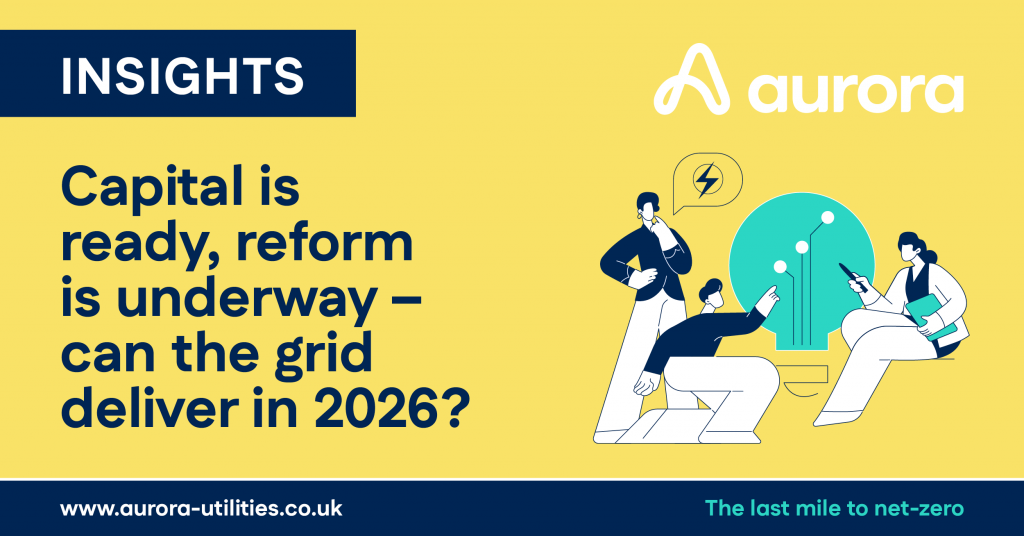
As of 2026, billions of pounds of capital is waiting on one thing: a grid connection.
Our latest survey captures the unfiltered voice of the UK infrastructure sector – and the message is unequivocal. The majority of developers and investors already have capital committed to projects that must connect to the grid within the next two years.
This is not hypothetical investment, this is real money, allocated and on the clock.
At the same time, recent progress by the National Energy System Operator (NESO) to clean up and consolidate the connections queue suggests the system is beginning to respond. The reshaping of the connection queue and the publication of a more focused pipeline in December mark a meaningful step toward aligning ambition with deliverability.
The question now is whether the reform will move fast enough to meet the scale of capital ready to deploy.
The scale of investment at stake:
Investors and developers told us about their investment plans for 2026, and this list highlights the scale of capital ready to deploy:
| Committed capital | Percentage of respondents (developers and investors) who said they have committed this figure to invest in new infrastructure requiring a connection in 2026 |
| Over £500 million | 9% |
| £100–£500 million | 19% |
| £50–£100 million | 27% |
| £10–£50 million | 21% |
| £1–£10 million | 15% |
| £100,000–£1 million | 6% |
| Less than £100,000 | The remainder are investing or have yet to finalise budgets. |
Overall, the findings reveal a strong level of capital readiness. Six in ten senior decision-makers (60%) have committed between £50m and £250m over the next 24 months, reflecting both confidence in the sector and the expectation that delivery conditions will continue to improve.
Grid delays: A known – and manageable risk
Grid connection delays remain a material consideration for investors, but they are increasingly being assessed within a clearer reform framework.
Respondents quantified the potential downside:
- Almost half said delays within the next 18 months could create a financial impact of £50 million to £1 billion for their organisation.
- Importantly, these risks are now better understood, priced, and actively managed as reforms progress.
What will shape delivery in 2026?
Queue reform is a critical enabler, but respondents were clear that delivery will depend on a broader policy and market context.
Looking ahead to 2026:
- 44% cited connection queue management changes as most impactful
- 43% pointed to capacity market rule changes
- 42% highlighted carbon pricing adjustments
Together, these responses underline the importance of coordinated reform rather than reliance on a single lever.
From congestion to clarity: Tackling the queue
For years, the UK’s grid connection system carried a heavy burden of speculative or stalled projects, slowing progress for those ready to build.
NESO’s recent actions – including the reshaping of the queue and the publication of a more focused pipeline in December – represent a meaningful shift away from congestion and toward clarity. The scale of the legacy challenge was significant, with thousands of projects competing for space under a system that prioritised timing over readiness.
Reform has begun to address this imbalance by distinguishing between projects that are genuinely ready to deliver and those that are not.
Prioritising deliverability
Under the new grid connection process, connection priority is now based on deliverability rather than filing order. Projects are assessed against clearer readiness criteria, including planning status, land rights, financing and alignment with national and regional energy planning.
The introduction of a gated process – including Gate 1 and Gate 2 – brings greater discipline to the system. Existing projects are also required to demonstrate eligibility, creating a more robust and credible pipeline.
This represents a structural shift: from an administrative queue to a framework designed to support timely, deliverable outcomes.
Progress, investment and market confidence
The reform is supported by substantial backing:
- £4 billion in fast-tracked grid investment
- £40 billion per year in private clean power investment targets under the Clean Power 2030 Action Plan
- While challenges remain – particularly around physical network capacity and local reinforcements – the direction of travel is increasingly clear.
Our survey reflects cautious optimism. While 26% of respondents remain neutral or unconvinced about whether Gate-2 alone will eliminate delays, this appears less a rejection of reform and more a recognition that structural change takes time to translate into delivery.
Some developers are understandably adopting a measured, portfolio-based approach as the new system beds in:
- Only 3% expect to build all approved projects within five years
- 44% expect to build fewer than half of their planned projects
- 57% anticipate losing between 11% and 20% of projects under the new rules
- This reflects a more disciplined pipeline, not necessarily diminished ambition.
A system moving in the right direction
The evidence points to a system in transition. Capital is committed. Reform is underway. The queue is becoming clearer and more focused.
NESO’s recent progress has created a stronger foundation – one that prioritises projects that are ready to move while creating greater transparency for investors and developers alike.
The challenge now is execution: ensuring that policy reform, network investment and market signals continue to move in step.
The opportunity is clear and the capital is ready, now the grid is finally starting to catch up.
Read the full report here: https://aurora-utilities.co.uk/grid-reform-boosts-investor-confidence-but-connection-barriers-persist-according-to-new-survey/